Wet patches, flaking paint and a musty smell are often the first clues that your home has a problem with damp and mould UK. These issues can stain surfaces, harm finishes and, over time, affect health and wellbeing.
Many cases start with condensation. Small habit changes — like drying clothes outside where possible, using extractor fans and keeping rooms gently warmer — reduce moisture and slow fungal growth without costly repairs.
Not all cases are condensation. The guide also explains simple checks for penetrating damp and rising damp, and when it is sensible to seek professional support.
For renters, the piece outlines landlord responsibilities, housing complaint routes and how Awaab’s Law speeds up responses for serious risks. Practical steps usually combine moisture control, ventilation and warmer surfaces rather than one miracle cure.
Key Takeaways
- Spot wet patches, peeling paint or a persistent musty smell early.
- Condensation is a common cause and often fixed by small habit changes.
- Carry out simple checks to rule out penetrating or rising problems.
- Solutions usually mix moisture reduction, ventilation and warmth.
- Renters have rights; Awaab’s Law requires quicker landlord action for severe cases.
Spot damp and mould early: the warning signs people miss
You can spot hidden moisture issues before they spread if you know what small signs to watch for. Early detection makes repairs easier and cuts the risk to soft furnishings.
What to look for on walls and ceilings
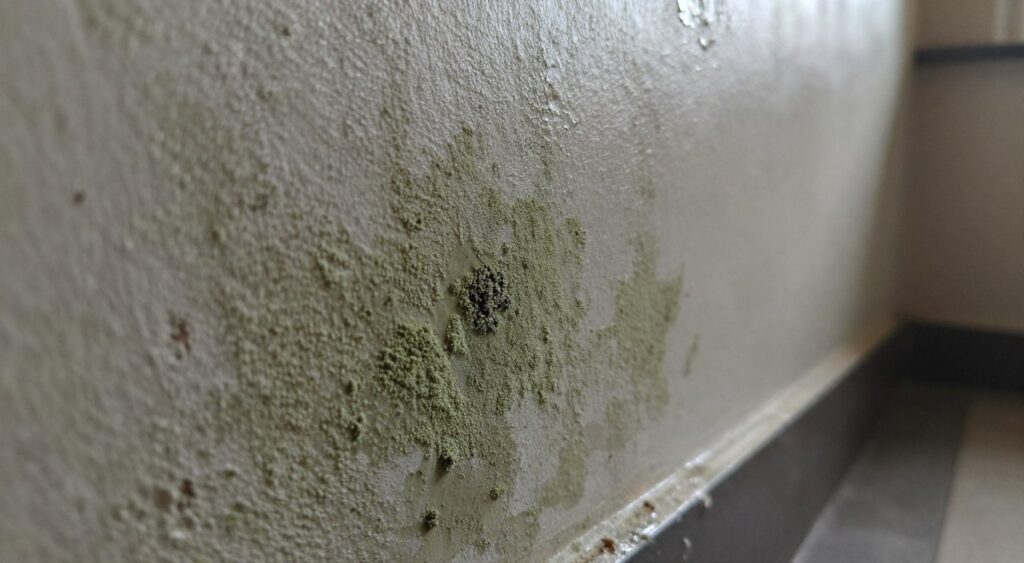
Speckled growth, fuzzy patches and shadowing in corners are common. Look for discolouration and uneven finishes near skirting and behind furniture.
- Speckled black or grey dots on walls and ceilings.
- Fuzzy patches or soft, powdery deposits behind cupboards.
- Bubbling paint, peeling plaster and flaky surfaces.
Why windows are a frequent hotspot
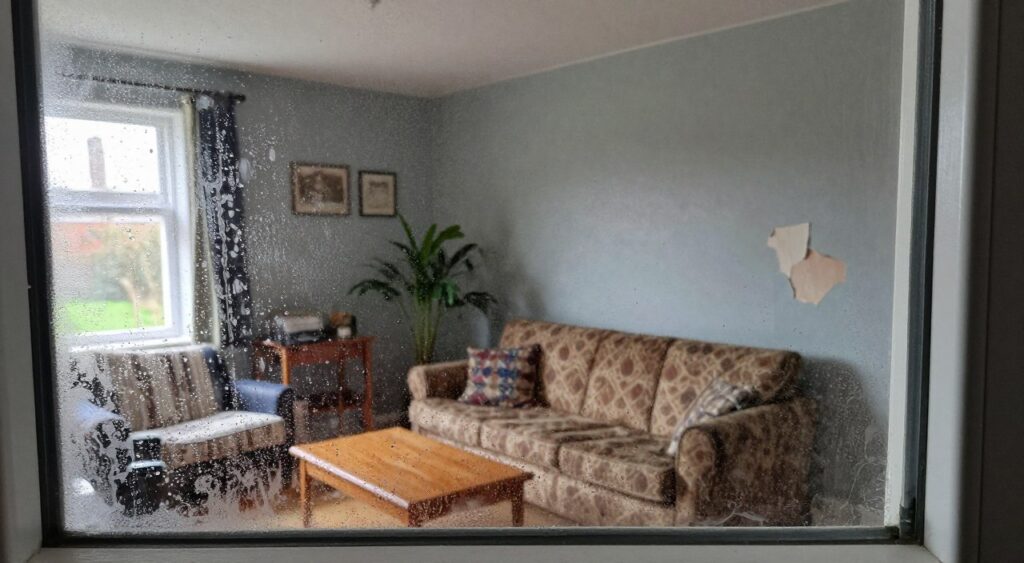
Cold frames and window reveals attract condensation. That keeps surfaces moist and feeds mould growth even when the rest of the room looks fine.
The classic pattern is tiny black dots clustered near window frames. People often wipe these away without fixing the cause.
Other red flags, pattern clues and health notes
Watch for tide marks low down, staining that won’t dry, or spots that get worse after rain. If patches appear after cooking or showering, condensation is likely.
Exposure can affect health, particularly for children, older people and those with breathing problems. Tackle ventilation and airflow early to stop spread.
Why damp happens in UK homes: moisture, air and cold surfaces
Moisture builds where warm, humid air meets cold surfaces, so everyday tasks can create spots that stay wet.
Condensation: the common triangle
Condensation forms when three things meet: moist air, cold surfaces and poor ventilation. If humid air cannot escape, it cools on windows, external walls or pipes and turns into water.
Everyday moisture sources
Routine activities add moisture quickly. Boiling kettles, steamy showers, drying clothes inside and even breathing overnight all raise indoor humidity.
Why it gets worse
Low or inconsistent heating lowers surface temperatures so water forms sooner. Missing insulation creates cold spots that repeat the problem, even in rooms that feel warm.
Overcrowding and pets
More people and pets in small rooms produce extra moisture. The same ventilation that worked before may no longer cope, so problems appear faster.
| Factor | How it adds moisture | Quick impact |
|---|---|---|
| Cooking | Steam from pots and kettles | Condenses on windows and tiles |
| Bathing | High humidity from showers | Shows on ceilings and bathroom walls |
| Indoor drying | Evaporation from wet clothes | Raises room humidity for hours |
| Occupancy | Breathing and body heat | More moisture in small rooms |
Condensation is the main cause damp and mould appear in many homes, especially in colder months when windows stay shut. The next section shows fast, everyday changes to reduce moisture without costly repairs.
damp and mould UK: quick everyday fixes that reduce condensation fast
You can cut condensation quickly by changing a few habits around cooking, drying clothes and heating. Small steps help air move out and keep surfaces warmer.
Ventilation habits that work
Open windows for short, regular bursts (5–10 minutes) rather than leaving them ajar all day. Keep trickle vents open and check airbricks are clear of boxes or plants.
Use extractor fans properly
Turn extractor fans on at the start of a shower or when cooking. Feel for steady suction and listen for a constant run. Clean blades and grills so performance stays high.
Cook, shower and dry clothes the right way
Use lids on pans and run the fan while cooking. Close bathroom doors when bathing and vent afterwards. Dry clothes outside where possible; if indoors, use a double spin, dry in one room with the door closed and a window open.
Furniture placement and heating basics
Leave a small gap between sofas or wardrobes and external walls so air can circulate. Keep heating steady to raise surface temperatures; bleed radiators and service the system so rooms heat evenly.
What to avoid
Do not use portable gas heaters indoors — they add moisture and worsen patches fast.
| Quick fix | How to do it | Impact | Do it how often |
|---|---|---|---|
| Window bursts | Open fully for 5–10 minutes | Flushes moist air out | 2–3 times daily |
| Extractor fans | Run during steam tasks; clean monthly | Stops moisture spreading | Every use + monthly clean |
| Drying clothes | Double spin; one-room drying with window | Less added humidity | When indoor drying |
| Heating maintenance | Bleed radiators; annual service | Keeps surfaces warmer | Seasonally / yearly |
How to clean and treat mould safely so it doesn’t just come back
A short, sensible cleaning routine can stop small black spots from becoming a long-term home problem.
Bleach-spray method: treat, dry, then repeat
Apply a bleach-based spray to the visible mould and leave to dry fully. Repeat the application rather than a single wipe for better kill rates. Keep the room ventilated while you work; avoid dry-brushing large patches to stop stirring spores.
Go wider than the patch
Treat at least 1 metre beyond the visible edge. Spores can live inside walls up to a metre away, so cleaning only what you see often fails. For a mould home, this wider zone reduces quick regrowth.
Repeat treatments and monitor
If spots return after showers, treat again and increase extraction immediately. Track results over time; repeat visits of growth show the moisture issue still exists and needs ventilation or heating fixes. This is a clear example of linking cleaning to moisture control.
When to dispose
Replace soft furnishings, wallpaper or furniture that are badly stained or structurally damaged. Some items hide spores in fibres or backing and cannot be cleaned effectively.
| Step | Action | When to repeat |
|---|---|---|
| Treat visible area | Spray bleach solution; let dry | Repeat after drying once |
| Treat wider zone | Extend treatment ≥1 m beyond stain | One initial deep pass |
| Monitor | Note regrowth after moisture events | Monthly for first 3 months |
| Dispose | Remove unsalvageable items | When cleaning fails |
Is it condensation, penetrating damp or rising damp? A simple home check
A short home inspection will often tell you whether the stain is everyday condensation, rain-driven penetration or true rising damp. Start with a few visual checks before spending on repairs.
Penetrating problems: rain-related patches and common building causes
Patches that get worse after heavy or wind-driven rain point to penetration. Look outside for blocked gutters, cracked tiles, damaged flashing, gaps around doors or windows, rotten timber and cracks in render.
Water can travel horizontally or vertically, so the visible stain may not sit above the entry point.
Rising damp: what it usually affects and why it’s often misdiagnosed
True rising damp normally affects the lower wall of a ground-floor room up to about 1 metre and can leave a tide mark. It is often mistaken for condensation or rain penetration.
Commonly the fault is a damaged damp-proof course; raised external ground levels can bridge a course and let moisture rise.
Older properties and impermeable finishes
Traditional, breathable walls manage moisture by letting it pass. Modern impervious renders or floors can trap moisture and make problems seem worse in older properties.
When to call a specialist survey
- Run short checks first: note if patches follow rain, appear at low level, or return after ventilation fixes.
- If stains recur despite condensation measures, or if rain seems linked, arrange a professional survey.
- Suspected structural faults or a failing damp-proof course need trades who can diagnose and carry out work safely.
| Visible sign | Likely cause | Quick next step |
|---|---|---|
| Stains worsen after rain | Penetration from roof, gutters, flashing | Inspect gutters, roof tiles and pointing |
| Tide marks at low level (to ~1 m) | Possible rising damp from a failed course | Check external ground levels; call a surveyor |
| Patches near windows or cold surfaces | Condensation or trapped moisture | Improve ventilation and heat the room |
Once you know the likely cause, tools and upgrades—humidity monitors, dehumidifiers, insulation and ventilation—make prevention easier. The next section explains those options in detail.
Tools and longer-term improvements that genuinely help
A few well-chosen devices and modest upgrades make it easier to manage humidity in homes over time. These tools do not replace good habits but they show what works and where to focus effort.
Hygrometers
Place a hygrometer in rooms where condensation appears most: bedroom, bathroom and kitchen. Aim for 40–60% relative humidity; risk rises above 60%.
Low-cost models from about £8 will show spikes after showers or cooking. Use readings to time short bursts of ventilation when levels climb.
Dehumidifiers
Run a dehumidifier with the room doors and windows closed for best effect and set it under 60% RH. Choose one rated to remove at least 5 litres per 24 hours.
Decent units start near £100. Expect running costs around 17p per hour (based on 27p/kWh). On warm, dry days, opening a window can match a small unit’s effect at no cost.
Insulation and ventilation upgrades
Insulation warms internal surfaces so air holds more moisture before condensing. Filling cold spots cuts repeat issues around window reveals and external walls.
Consider mechanical extract systems that run low continuously and boost on humidity, plus trickle vents to keep steady background airflow. These upgrades reduce the need for constant manual airing.
| Tool | When to use | Quick benefit |
|---|---|---|
| Hygrometer | Always in problem rooms | Shows RH so you can act |
| Dehumidifier (≥5L/24h) | Closed-room use | Removes excess moisture |
| Insulation | Cold external walls | Raises surface temp; less condensation |
| Mechanical extract | Bathrooms/kitchens | Continuous removal of moist air |
If you rent: landlord responsibilities, Awaab’s Law and how to escalate
If you rent, knowing how to report a housing problem clearly helps speed action. Your landlord should treat reports seriously and agree a plan, not dismiss issues as lifestyle without a proper check.
Reporting: what to put in writing
Write the date, rooms affected, clear photos and short notes on how the issue changes after rain or daily use.
Add what you’ve already tried and any health effects. Ask for a written response with inspection dates so there is a record.
Awaab’s Law and the 10-working-day timeline
Under awaab law, serious cases that risk health must be investigated within 10 working days. Use this timeline to chase an unresponsive landlord and to show you have followed the correct process.
Repairs, rising problems and landlord duties
Landlords are usually responsible for structural faults and repairing an existing damp-proof course. Installing a new course can be complex and may be treated as an improvement case-by-case.
Escalation: complaint routes and the Housing Ombudsman
If the landlord procedure fails, complain to the housing ombudsman. Good handling looks like prompt inspection, clear updates and realistic repair dates.
Real outcomes
Some cases show severe maladministration where a roof leak took almost 16 months to fix and the home was unsafe for many months. Other cases find no maladministration when prompt inspections and urgent health-led action were recorded.
| Step | What to include | When to escalate |
|---|---|---|
| Initial report | Dates, rooms, photos, health notes | If no reply in 5 working days |
| Request inspection | Ask for appointment date and notes | If inspection not booked within 10 days |
| Formal complaint | Use landlord’s complaints process in writing | If outcomes are unclear or delayed |
| Ombudsman | Submit records, timeline and copies of responses | After internal complaint closed or mishandled |
Conclusion
Tackling the root causes — excess humidity and cold spots — is the quickest way to protect rooms and belongings. In many homes, most mould growth is caused by condensation, so reducing moisture and improving airflow gives the best results.
Watch for black dots near cold surfaces, staining, peeling paint or patches that return after cleaning. These signs point to an underlying cause rather than a one-off stain.
To prevent condensation: make less moisture (use lids when cooking; dry laundry wisely) and get moist air out (fans, short window bursts, trickle vents). Keep surfaces warmer with steady heating and targeted insulation to stop water forming.
Try this simple example routine: check a hygrometer, ventilate after showers and cooking, then re-check the readings the next day. If stains link to rain or persist despite these steps, arrange a specialist survey.
If you rent, report issues early, keep records in writing and escalate if needed — especially where health is affected.