Social media nudges many of us to seek a fresh start in the new year, but the energy often fades and rooms end up with half-sorted piles. This simple plan offers a low-pressure way to reset your home without turning a weekend into a marathon.
The aim is not a showroom-perfect room but a home that feels lighter and easier to live in. Fifteen minutes a day of focused microshifting breaks big decisions into tiny, manageable steps.
That steady rhythm helps stop piles migrating between rooms and frees up usable space where you actually live. It suits busy households, families and empty nesters who want a realistic fresh start.
Read on to learn why decluttering feels hard, how to set intentions, the daily method to start today and a simple plan that really sticks.
Key Takeaways
- Small, daily sessions beat one-off marathons for lasting results.
- Fifteen minutes a day prevents burnout and fits around work.
- The goal is a home that feels lighter, not perfection.
- This method reduces time spent searching and roaming piles.
- It works for busy households, families and empty nesters.
Why January decluttering feels hard in UK homes (and why it’s not willpower)
A spike of online inspiration can send you charging into your home, only for real life to intervene by teatime. Social media makes tidy reveals feel instant, but work, school runs and chores cut into the time you actually have.
The familiar New Year “fresh start” cycle: social media motivation vs real life
Feeds show perfect before-and-afters and you plan a full blitz. In reality the new year brings evenings that are already full, and that motivation often fizzles after a busy day.
Clutter as unmade decisions: guilt, identity, hope and fear of waste
Clutter is usually a pile of unmade decisions. Each item can carry guilt (money spent), identity (who you were), hope (hobbies you meant to start) or fear of waste.
Think unworn workwear after a job change, hobby kits you never used, or kids’ things frozen in a past year. These stories make saying get rid much harder.
Why “one space a day” often becomes half-sorted piles
The simple plan of one room a day can backfire. You sort, run out of time and move piles from table to spare room. The space looks different, but nothing leaves.
| Item type | Emotional friction | Quick action |
|---|---|---|
| Clothes | Identity / money | Try on; donate unworn |
| Hobby gear | Hope / guilt | Set 15-day test or pass on |
| Kids’ things | Sentiment | Keep a small memory box |
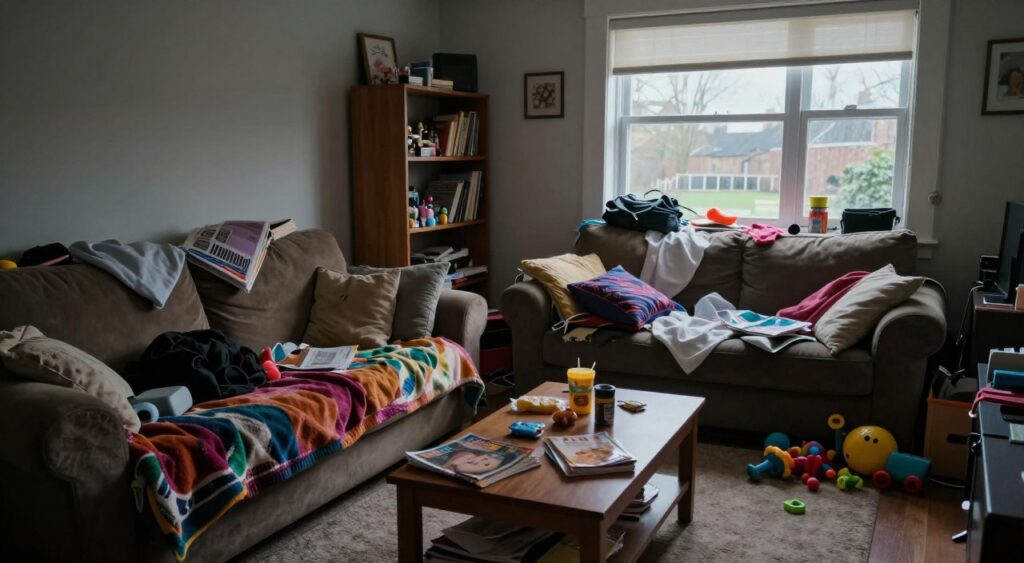
Reframe success: don’t shuffle things—help items leave responsibly so your home truly changes. Today, use 15 minutes to finish one micro-task and avoid creating another half-done mess.
Set your intention before you start: make your home fit the life you live now
Before you lift a box, decide what you want your home to do for you today and this year. A short pause saves time later and stops you keeping things by default.

Quick reflection prompts: what’s changed in the last five years?
- Has your work or routine shifted? What does a normal week look like now?
- Which hobbies or commitments still matter, and which have fallen away?
- Who uses each room most, and what do they need to make life easier?
- What items cause small daily friction—lost keys, cluttered surfaces or slow mornings?
Define what “lighter” means for you: time, space, calm and ease
Write down one or two outcomes you want: more space at the table, less morning rush, a calmer hallway or fewer chores.
- Pick 1–2 priority areas where change will be felt fastest (for example the kitchen or the landing zone).
- Set the order: intention first, short daily sessions next, then a simple rule to decide what stays.
When your aim is clear, it’s easier to let go of items that don’t fit your current life and work patterns. Use this way of thinking to start small and keep momentum.
How the “15 minutes a day” method works (microshifting without burnout)
Fitting a quick, purposeful session into a real schedule keeps momentum alive. Microshifting means you use 15 minutes to finish one small task instead of tackling a whole room.
Pick a daily slot that survives real life
Choose a consistent time linked to a habit: while the kettle boils, at lunch or after dinner. That makes the session easy to keep every day.
Define a clear finish line
Decide a finish line before you start: one box, one shelf or one short category of similar items. Treat that place as complete when done.
Simple tools that keep you moving
Use a folding laundry basket for things that belong elsewhere, one donation bag and a recycling box. This setup helps items leave quickly and avoids new piles.
| Task | Typical time | Tool | Finish line |
|---|---|---|---|
| Clear kitchen surface | 15 minutes | Recycling box | Surface clear |
| Sort one drawer | 10–15 minutes | Laundry basket | One drawer done |
| Gather receipts and bags | 7–10 minutes | Small tray | Receipts organised |
| Sort similar items (charger cables) | 15 minutes | Storage box | All cables boxed |
Adaptive pacing for low-energy days
On tired days, sit while sorting, do a tiny surface or set a 7–10 minute timer. Small progress today still adds up across the month.
January decluttering challenge UK: a simple daily plan you can start today
Pick one visible area each day and use a quarter-hour to complete it; small finishes stop piles growing. This flexible plan fits even smaller homes because each day is a focused 15-minute sprint with a single finish line.
Day focus ideas for practical results
- Kitchen surfaces, cupboards and fridge — bin expired food, reset one shelf and clear the busiest worktop for calmer weekday cooking.
- Seasonal décor reset — pack what you love, get rid of items not displayed this season and label boxes for easy storage.
- Loft, garage or shed once-over — make space so stored items are usable; cramped storage often means you have too much.
- Wardrobe edits — sort clothes, shoes and bags by season; move true seasonal items into labelled boxes.
- Living room clear-down — remove cards, excess blankets and board games so the main living place feels restful again.
- Mini reset spots — clear the car, the junk drawer and handbag receipts for quick wins on busy days.
- Family areas — gather kids’ toys by category, donate duplicates and keep a small memory box with limits.
- Entryway order — edit coats and shoes and create a landing zone for post and keys so arrivals feel calm.
Make each day count: responsible exit routes
Decide how things leave as you work. Donate or sell items in good condition, recycle what you can and book a drop-off so bags actually go out of the house.
| Day focus | Time | Finish line |
|---|---|---|
| Kitchen shelf | 15 minutes | Surface clear |
| Wardrobe edit | 15 minutes | One rail or box done |
| Car / junk drawer | 10 minutes | No loose receipts |
Declutter by category, not by room: the KonMari order that builds confidence
Gathering similar items together gives you a quick, honest view of quantity and usefulness. Seeing everything of one kind in one place stops you meeting the same things across every room and wasting time.
Why gathering similar items changes decisions
When all items of a type are visible, patterns appear: duplicates, worn-out pieces and unused extras. That visibility makes decisions faster and more consistent.
The category sequence that builds decision muscle
Follow this order to grow confidence:
- Clothes — start with easy wins.
- Books — spot unread stacks and duplicates.
- Papers — sort urgent vs. recyclable.
- Miscellaneous (komono) — gadgets, tools and kitchen bits.
- Sentimental — leave for last when your decision skills are strongest.
The simple decision filter
Ask: “Does this support the life I’m living now?” Keep what you use and love. Let go of things that belong to a past or imagined life.
For a 15-minute slot, pick a sub-category — “scarves” or “cookbooks” — and finish that pile. This small, repeatable order reduces year decluttering relapse because you build habit and spend less time redoing the same work.
Make it last: keeping your space clear once the challenge ends
Long-term order depends less on a big clear-out and more on small, repeatable systems that fit your week. After KonMari-style decisions, maintenance is simple if every essential has a clear home.
Create homes for essentials: cupboards, boxes and labelled storage
Use cupboards well by grouping like things together and keeping daily items at eye level. Choose boxes and bins that fit the shelf so nothing gets pushed to the back.
Label each container so everyone in the house can return items quickly. When things have a defined home, tidying stops being a negotiation and becomes fast.
Move items out promptly: donate or sell things in good condition
Make your exit plan non-negotiable. Book donation drop-offs, arrange a collection or list sellable items straight away so bags do not linger in hallways.
Prioritise items in good condition and group similar things to save time. Keep one dedicated outgoing box for donations and another for things to sell.
| Routine | Why it helps | Finish |
|---|---|---|
| Reset one surface each evening | Stops nightly pile-up | Surface clear |
| Outgoing box by the door | Makes getting rid easy | Bags leave house |
| Labelled cupboards and boxes | Saves searching time | Items returned |
Simple one-touch habits—open post at the door, return shoes, wipe a shelf—save time and reduce future cleaning. These small steps protect the space you created and fit into busy work weeks.
Maintenance is not strict rules. It is about clear homes for essentials, fast routines and sensible exit routes so your results last beyond the short-term decluttering challenge.
Conclusion
Real change comes from tiny habits, not dramatic weekend overhauls.
.
This guide’s core promise is simple: january decluttering works when you build small, daily actions into a routine rather than relying on willpower for a big clear-out.
Mindset matters. Decisions about identity and use beat motivation. Use a clear framework to decide what supports your life now and let the rest go.
Quick method: set an intention, pick a 15-minute slot, define a finish line, grab simple tools and slow the pace on low-energy days.
Choose a path that suits you: a daily plan for fast wins or a category-led route to grow lasting confidence in the decluttering challenge.
Keep spaces working by giving essentials a home and making outgoing items leave promptly. For a practical next step, pick one small category or one surface and start today so your home feels calmer as the new year unfolds.