Feeling overwhelmed after the festive rush is normal. Sophia Lorimer of Fine-Tuned Wardrobe reminds us that a reset is not about perfection. It is about clearing energy, creating space and easing into the new year.
This short, realistic home rescue suits busy UK routines. You don’t need to deep-sort every cupboard. Instead, spend two focused hours on high-impact clearing that makes your space feel calmer straight away.
Acting in the days after the holiday makes sense: new gifts arrive, packaging piles up and surfaces soon look chaotic. This guide gives four timed blocks and quick wins for decorations, unwanted gifts, kitchen overflow and high-traffic cleaning.
The approach is practical and low-cost. Use simple decisions, minimal kit and one-room focus with clear sorting categories so you don’t create more mess while trying to remove it.
By the end of the two hours key surfaces will be clear, donations bagged and tomorrow-you will have less to manage.
Key Takeaways
- A two-hour, high-impact reset beats perfectionism.
- Work room by room and use clear sorting categories.
- Focus on space, energy and a gentle restart for the new year.
- Simple tools and decisions keep the plan budget-friendly.
- Expect cleared surfaces and donations ready by the end of the sprint.
Set yourself up for success before you start
A clear plan before you begin saves time and stops decisions from piling up. Pick a realistic two-hour window and commit to a start time so the task moves quickly and doesn’t drag on.

Gather simple supplies
- Sturdy bin bags and a couple of boxes (one for giveaway, one for sell).
- A laundry basket for returns, labels, a marker and wipes for quick resets.
- Use spare tote bags, delivery boxes or a recycling bag for extra storage.
Create five fast sorting zones
Give every item a home: keep, donate, sell, recycle, bin. Labelling a box with its destination — for example “charity shop”, “Vinted photos” or “kitchen cupboard” — keeps decisions moving.
| Zone | What to put there | Action within the two‑hour slot |
|---|---|---|
| Keep | Useful items and favourites | Return to shelves or labeled box |
| Donate / Sell | Unwanted but good condition | Bag up and label for drop‑off or listing |
| Recycle / Bin | Packaging, broken goods | Empty straight away |
One room at a time
Focus on one room to avoid scattering things across the house. Anything for another room goes in the return basket and is delivered in one trip at the end.
At the 60‑minute mark, pause briefly to tie bags, flatten boxes and reclaim floor space before the second hour.
Post Christmas declutter: the two-hour sprint plan
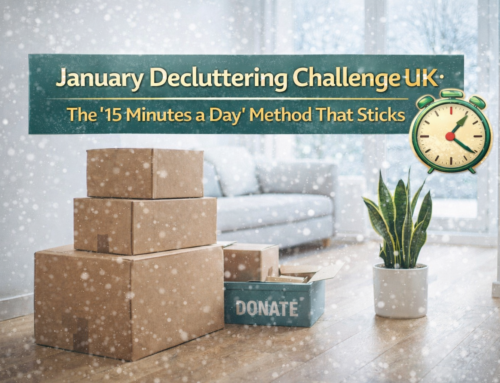
A short, timed sprint is the easiest way to reclaim your main living spaces. Below is a four-block layout you can follow on the day to make steady progress without overthinking. The aim is clear surfaces and fewer decisions later, not perfection.
- 25 minutes — First block: remove obvious rubbish and packaging
- 30 minutes — Second block: re-home new gifts and apply one-in, one-out
- 35 minutes — Third block: clear surfaces fast in living, hallway and kitchen
- 30 minutes — Final block: bag donations, list sellable items and book drop-offs
First block: remove obvious rubbish and packaging
Start with wrapping, plastic, tags and opened boxes. Flatten cardboard straight away to free floor space and reduce visual clutter.
Do a quick duplicates check — extra candles, repeat mugs or stocking fillers — and move them to the donate/sell box rather than letting them linger.
Second block: re-home new gifts and one-in, one-out
Give every new gift a specific home. If something goes into a cupboard, choose one item to remove so the house doesn’t overflow.
For family items like toys, do a swap: let children help pick a few outgrown toys to donate before new ones arrive in the living area.

Third block: clear surfaces fast
Focus on the coffee table, console, sofa area and kitchen counters first. Pick up anything that doesn’t belong and sort into your zones.
Wipe surfaces and replace one or two curated items so the room looks finished even if cupboards are still a work in progress.
Final block: tie up and plan the admin
Tie bags, seal donation boxes and make a short list: what goes to charity, what needs photographing for sale, and what needs a recycling centre trip.
Book or plan recycling/drop-off dates while motivation is high so rubbish doesn’t sit by the door for days. Remember: this process saves time later and keeps momentum on your side.
Reset festive décor without the emotional overload
A calm, sensible method makes taking down decorations quicker and less emotional.
Do a quick “joy check” as you pack
Use Tanya Sanyal’s KonMari-style joy check: keep only items you used, loved or enjoyed seeing this year. This gives you a clear rule to follow when decisions feel hard.
Photograph sentimental bits
For children’s crafts and fragile keepsakes, photograph them before recycling or gifting. A photo keeps the memory without using up loft space.
Filter, donate and recycle
If a decoration never left its box, ask why. Style changes, damage or sheer excess are valid reasons to let it go. Donate good-condition pieces and recycle broken baubles or tangled lights.
Pack smarter for next year
Wrap delicate items together, group by place (tree, mantel, table) and label boxes clearly. One sensible upgrade such as bauble dividers or a sturdy tree box (for example the Really Useful 77L Christmas Tree Storage Box) protects items and speeds next year’s set-up.
| Task | What to keep | Action |
|---|---|---|
| Joy check | Used, loved items | Pack and label |
| Photograph | Kids’ crafts, fragile keepsakes | Image and recycle/store digitally |
| Donate / Recycle | Unused or broken decorations | Bag for charity or recycling |
| Storage upgrade | Baubles, artificial tree | Use dividers or 77L tree box |
Deal with unwanted gifts quickly and guilt-free
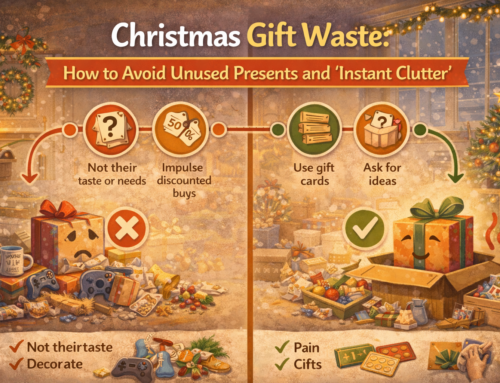
A quick, kind strategy helps you handle unwanted gifts without stress or drama. Shannon Murphy of Simpl Living Co advises releasing guilt: once a present is given, it becomes your choice.
Separate gratitude from obligation
Nicola Fraser says you don’t owe anyone a permanent home for an item you don’t love. You can thank the giver and still choose what earns space in your home.
Practical decision framework
- Will I use it in the next month?
- Do I already own a better version?
- Would I buy this for myself today?
Good routes for unused items
For sealed toiletry sets and unused items, check local food banks or community charities. Confirm their guidelines before dropping off.
| Way | Best for | Quick tip |
|---|---|---|
| Donate | Sealed toiletries, good-condition homeware | Bag and label for local centre |
| Sell | New or branded items | Batch photos in daylight; list on Vinted |
| Re-gift | Thoughtful matches with near-term recipients | Only if you have a clear recipient and occasion |
If unsure, use a sealed quarantine box with a date. If you don’t reach for the items, donate or sell them. The purpose is simple: a home that supports you, not cupboards of “maybe someday” things.
Kitchen and food clear-out for a proper new year reset
Begin in the kitchen — clearing food and packaging creates immediate visual and practical relief. A focused fridge and pantry sweep feels like an opportunity to reclaim space fast and to set helpful habits for the coming days.
Fridge and pantry sweep: check dates, wipe shelves, and restock intentionally
Follow Laura Price’s approach: take everything out, wipe shelves, check use‑by dates and group items by type. Seeing what you actually have stops impulse buys and prevents forgotten jars taking valuable space.
- Remove contents and sort into keep, eat, freeze or bin.
- Wipe shelves and door seals while items are out.
- Return food by category so you spot gaps and duplicates.
Make a plan for leftovers (eat, freeze, or bin)
Decide today what must be eaten in the next few days, what can be frozen (label with dates) and what needs binned. This simple routine prevents lingering mess and makes weekday meals easier.
Watch for seasonal extras like sauces and chutneys that go unused
Laura Price flags relishes, sauces and chutneys as items that often expire. Treat these as an opportunity: plan one or two meals that use them so they don’t take up space for months.
| Action | Best for | Quick tip |
|---|---|---|
| Eat first | Short‑dated ready meals, fresh produce | Place at eye level in the fridge |
| Freeze | Cooked meals and portions | Label with date and content |
| Bin or recycle | Expired jars, damaged packaging | Empty and rinse containers before recycling |
Speed tip: shut the fridge door while you clear counters so you don’t waste time. Finish with a five‑minute evening sweep for the next few days to keep the momentum and support healthier routines during this period.
Deep-clean the high-traffic areas that took a beating
Start where the traffic is highest and you’ll notice the biggest change. A short, structured clean removes the visible evidence of busy days and helps the house feel like yours again.
Guest rooms: act before you shut the door
Laura Harnett (founder of Seep) advises tackling guest rooms straight after visitors leave. Strip beds, open a window for a few minutes and gather towels and stray belongings.
Do a quick sort: return bags of stuff, fold fresh linen and reset the room so it isn’t a task that lingers for weeks.
Living spaces: floors and worktops first
Prioritise what you see and touch most — floors, rugs and worktops give the biggest visual lift. Clear clutter top-down, then dust and wipe, then vacuum or mop.
This approach saves effort and keeps you from cleaning around things that belong elsewhere. Focus on the few surfaces that make your living place feel finished.
Bathrooms: sort empties, then clean
Before any spray, do a bin-and-sort. Remove empty tubes, consolidate half-used products and corral daily essentials into one small tray.
House Beautiful recommends this step; it makes the actual cleaning faster and stops products from multiplying on a shelf.
- Pick two or three zones that bother you most (hallway floor, kitchen worktops, bathroom sink) and do those properly.
- Use reusable cloths and gentle multi-surface solutions to reduce waste — a sustainable tip from the Seep founder.
- Once high-traffic areas are done, your house will look cleaner for longer, saving time and energy as the years move on.
| Area | Fast tasks (10–20 mins) | Why it matters |
|---|---|---|
| Guest room | Strip bed, ventilate, stash guests’ stuff | Prevents the room becoming an ignored task |
| Living area | Clear worktops, fold throws, vacuum rugs | Big visual impact with little time |
| Bathroom | Bin empties, group half-used items, quick wipe | Makes deep cleaning quicker and neater |
| Hallway | Sweep, clear shoes and coats, wipe surfaces | Improves first impression and daily flow |
Conclusion
A clear, short method gives you visible results fast and keeps momentum going. In two focused hours you can reduce clutter, reclaim key space and make your home feel liveable again without a major overhaul.
Keep Sophia Lorimer’s idea in mind: aim for a gentle reset, not perfection. Use Tanya Sanyal’s joy check and photograph sentimental crafts to ease tricky decisions. Tackle guest rooms, floors and worktops first, and watch Laura Price’s pantry tip to use that extra sauce or chutney before it expires.
What to do next: drop donations within 48 hours, schedule recycling and keep one labelled box for sell/list items (Vinted works well in the UK). Spend five minutes each day for the next few days to return things, clear surfaces and handle food. If two hours feels too much, split the process over a couple of days. Small choices now will make next year simpler, and your family will thank you.