Choosing a christmas tree is a household decision that mixes tradition, mess and convenience with cost, storage and environmental impact.
Each year around five million real christmas trees are sold in the country, with Nordmann fir the most popular option. A two-metre artificial christmas tree carries a benchmark footprint of about 40kg CO₂e, so reuse matters: Carbon Trust suggests roughly ten uses to break even, while many fake trees are used only four times.
Cost here means more than the ticket price. Think years of use, stands, lights, delivery and replacements. Storage is real too: a synthetic option needs space for most of the year, while natural choices need transport and a waste plan after the season.
End-of-life choices shape the overall impact: landfill methane from decomposing logs contrasts with long-lived plastics and metals. There is no single perfect option, but clearer buying, using and disposal choices make a big difference.
This guide offers a friendly, evidence-led comparison to help you decide the best way forward for your one festive set-up this season.
Key Takeaways
- Around five million natural trees are bought annually; Nordmann fir leads sales.
- A 2m fake option has an approximate 40kg CO₂e footprint; reuse reduces this impact.
- Consider total cost: purchase, extras, years of use and storage needs.
- Disposal routes shape the footprint: composting differs from landfill, and plastics persist.
- No single answer fits all — choose to suit household size, budget and disposal options.
Real vs artificial Christmas tree UK: what most people are really comparing
For many people, the choice comes down to daily living: ease of care or the scent of fresh foliage.
Most buyers compare more than price. They think about setting the tree up, living with it in the home and packing it away after the season. That whole experience shapes the decision as much as cost or appearance.
Upfront convenience vs the “real Christmas” experience at home
Artificial options appeal for fast assembly, no watering and a predictable shape each year. They suit households short on time or those who travel over the festive period.
A real christmas tree offers the ritual of choosing and the natural scent from terpenes. Many families value that tradition and the sensory memory it brings.
Looks, fragrance, and tradition: what you gain (and lose) with each tree
Higher-end synthetics can appear very convincing, but some still read as synthetic. A live Nordmann Fir looks irregular and natural, which some people prefer when decorating.
Fragrance is a key differentiator. Natural foliage gives a genuine aroma. Artificial christmas options often need sprays or candles to mimic that smell.
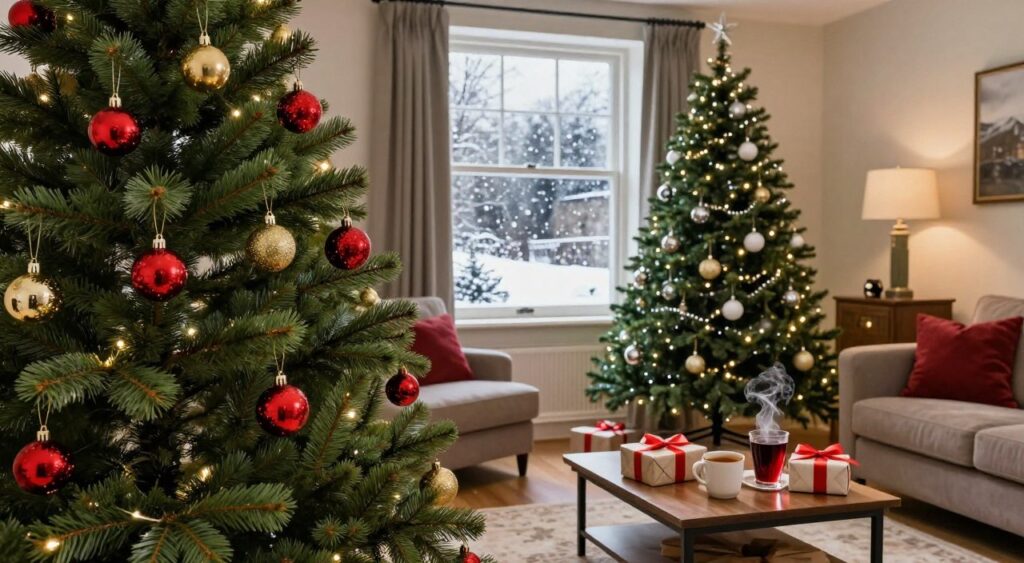
Who each option tends to suit in the UK
Flats with little storage space may favour an artificial christmas option for ease of year-round storage. Families who enjoy an annual outing and the ritual may prefer a real christmas tree.
Practical lifestyle factors matter: pets, toddlers, space, and how much time you have to fluff branches, water and tidy up all influence the best choice for people and household type.
- Small flats: compact artificial trees or smaller live varieties.
- Families with children: live outings and scent-rich options often win.
- Busy households: pre-lit, consistent artificial trees reduce fuss.
| Feature | Live Nordmann Fir | Mid-range artificial option | High-end artificial option |
|---|---|---|---|
| Setup & care | Needs watering and trimming | Quick assembly, some fluffing | Tool-free assembly, durable branches |
| Appearance | Natural, irregular shape | Convincing but may look synthetic | Very lifelike, consistent year to year |
| Storage & space | Requires transport and short-term storage | Needs compact storage space | Requires larger storage but lasts longer |
| Best for | Rituals, scent lovers | Busy households on a budget | Those wanting long-term consistency |
Cost in the UK: purchase price, lifespan, and value over years
Upfront cost is easy to compare; annual cost per use is what tells the true story. Think beyond the sticker and ask how many years you expect to keep a purchase. That simple divide often changes the best option for your household.
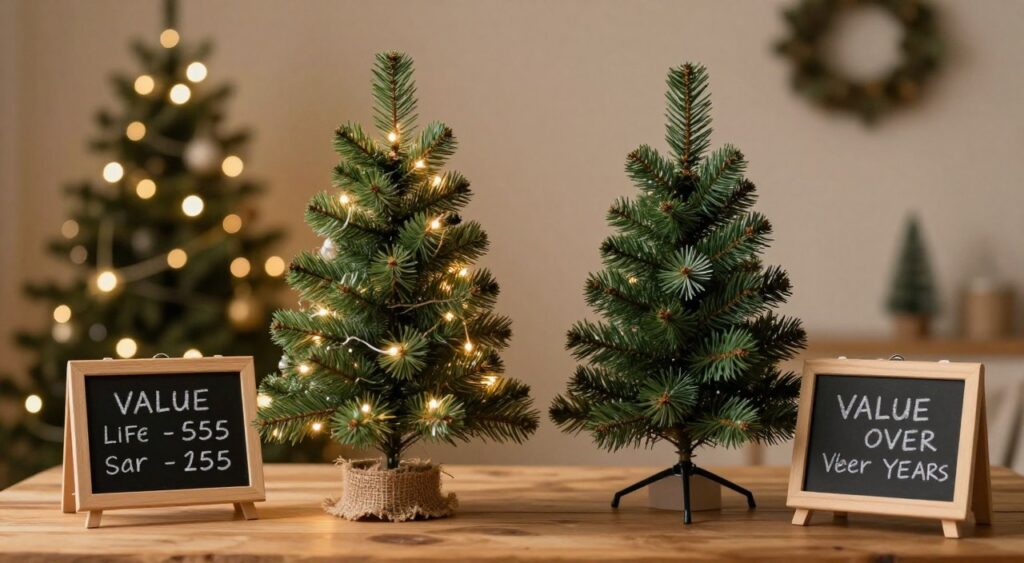
Typical price expectations for a christmas tree vs artificial christmas trees
Buying a natural christmas tree is usually an annual spend. Prices tend to sit in a modest band and repeat each year.
By contrast, artificial christmas trees shift the spend to the first purchase. The idea is that the higher initial cost spreads over multiple years of use.
How long artificial trees actually last in real homes
In practice, many artificial trees are used fewer times than owners expect. Damage in storage, bent tips and crushed branches shorten useful life.
Sources suggest typical use can be around four times for many households, though careful storage can stretch life to six to eight years.
When a higher-end artificial christmas tree may be worth it
Premium models use denser tips, stronger stands and better materials. They often look more believable at a chosen size and height and survive handling better.
Pre-lit options save time each year but can be harder to repair than unlit choices.
The hidden annual costs
- Replacement lights and repair parts
- Stronger stands and storage bags
- Delivery charges and occasional new decorations
| Option | Typical upfront | Approx cost per year (5 yrs) |
|---|---|---|
| Natural small | £25 | £25 |
| Mid-range artificial | £120 | £24 |
| Premium artificial (pre-lit) | £300 | £60 |
Do a quick comparison using your budget and storage space: divide upfront cost by the years you realistically expect. How you store an artificial option often decides whether those years actually happen — and that leads neatly into the next section on storage and space.
Storage and space: what your tree demands the other eleven months
Where you keep a seasonal tree matters almost as much as which one you buy.
Loft, garage, flat: realistic storage options by home size
Not every home has a large loft or spare garage. A boxed option can dominate a flat cupboard for most of the year.
Under-bed bags suit slim sizes. Split-section models fit wardrobes. Heavier, taller items need a robust box or dedicated shelving.
Keeping shape and branch tips intact year after year
Heat, damp and crushing are the usual culprits. Loft extremes warp plastic tips and damp can rot hooks and hinges.
Store upright where possible and use a breathable bag. Keep heavy items off the box and avoid shoving by hand to prevent snapped branches.
- Think the “11-month footprint”: one option leaves the home after the season, the other needs space all year.
- Measure height and hallway width before purchase to avoid awkward manoeuvres inside the home.
- Poor storage shortens life, which cuts value and raises the environmental cost over time.
| Home type | Best storage | Notes |
|---|---|---|
| Flat | Under-bed bag / slim box | Low ceiling clearance matters |
| House | Wardrobe split sections | Easier upright storage |
| With garage | Heavy-duty box | Keep off concrete, avoid damp |
Environmental impact: carbon footprint, materials, and transport
Counting emissions from materials, manufacture and shipping gives a clearer environmental picture.
What drives the carbon load
Major drivers are materials, factory energy, long-distance shipping and end-of-life handling.
Many items are made from plastic, PVC and metal overseas, which concentrates emissions before they reach Britain.
Benchmarks and reuse
The Carbon Trust cites about 40kg CO₂e for a two-metre artificial tree. To offset that footprint you may need roughly 10 years of use.
In practice, many artificial christmas trees are used only around four times, which weakens the climate case unless they last longer.
Benefits of a grown crop
A popular natural option takes about 10–12 years to reach roughly 6ft. While growing, these trees capture carbon and support wildlife habitat.
Most are cultivated as a horticultural crop, not taken from established woodland, which reduces concerns about deforestation.
| Factor | Artificial trees | Grown trees |
|---|---|---|
| Materials | Plastic, PVC, metal (often non‑recyclable) | Wood, biodegradable |
| Upfront emissions | ~40kg CO₂e for 2m | Low per season, captured over growth |
| Break-even | ≈10 years of use | Benefit during growth; impact if landfilled |
End-of-life in the UK: recycling, disposal, and what happens next
The final journey for your seasonal tree often decides its true impact. Disposal can turn a modest household choice into either a low‑impact finish or a lasting waste problem.
Why landfill harms both options
When a natural option rots in a sealed landfill it can produce methane. That gas is far more potent than CO₂ per unit released.
By contrast, many synthetic products are mixed plastics and metals. They rarely break down and add long‑lasting waste to landfill sites.
Practical best routes for a grown specimen
Most councils run early‑January collections and chipping schemes. Chipped wood can become mulch or compost and returns nutrients to soil.
If kerbside pickup is not provided, use garden waste services or local household recycling centres that accept yard material.
Burning, composting and emissions
Where permitted, controlled burning reduces potential emissions versus landfill by a large margin — sources estimate around an 80% cut in that pathway.
Composting and chipping are lower‑tech but still positive: they cut methane risk and create useful mulch for gardens and paths.
Simple next steps and wildlife-friendly reuse
- Remove decorations and lights by hand, cut to allowed lengths and check council dates.
- Use a sheet to carry out the mess and vacuum needles afterwards for quick cleanup.
- Turn branches into a shelter by a feeder, make a habitat pile, or spread chips as mulch paths.
| Route | Benefit | Note |
|---|---|---|
| Council collection & chipping | Recycles biomass into mulch | Check local dates |
| Composting | Returns nutrients, low methane | Requires space and time |
| Controlled burning | Lower emissions vs landfill | Follow safety rules and local regs |
Make disposal a small family ritual. Finishing the season responsibly leaves a better experience and a smaller environmental impact for the year ahead.
Health, safety, and allergies: needles, dust, and materials at home
Bringing a seasonal tree indoors introduces scent, shed needles and potential allergens to manage. Small steps make life easier for people who share a living space with pets or young children.
Needle drop and simple maintenance
Choose a low-needle Nordmann Fir and bring the christmas tree in close to December to reduce shed. Refill the water stand daily and keep the tree away from radiators and open fires.
Use a stable stand and vacuum under the skirt weekly. These maintenance habits cut mess and the chance of slips from scattered needles.
Allergies and common irritants
Some household members react to spores, sap or terpenes that give the festive scent. Branches and decorations collect dust, so anyone with allergies should avoid touching mouldy or dusty parts.
Artificial options can also trigger symptoms if they sit uncleaned for months.
Synthetic safety and materials
Cheaper artificial christmas trees may be more flammable and can emit fumes if stored in hot conditions. Many are made from pvc and plastic with metal frames, which complicates recycling.
Inspect older trees for degraded coatings, shedding dust or damaged wiring; replace if cleaning won’t make them safe.
| Issue | Risk | Simple fix |
|---|---|---|
| Needle drop | Slip hazard, mess | Water daily, vacuum weekly |
| Allergic reaction | Sneezing, irritation | Keep distance, clean branches |
| Flammability / fumes | Fire risk, poor air | Check labels, avoid heat sources |
| Legacy materials | Dust, degraded coatings | Inspect and replace older items |
Decide what’s best for your household by weighing sensitivities, pets and how much upkeep you will do. That approach keeps the season safe and comfortable for everyone.
Sustainability checklist for a real tree in the UK
A few simple checks at the point of sale will steer you to greener seasonal choices. Use this checklist to reduce emissions, support growers and make disposal easier.
Certification and pesticides
Look for FSC certification. It signals better woodland management and lower pesticide use where practical.
Organic and local options
Organic growers minimise chemical sprays. Buying local cuts transport miles and keeps income in rural communities.
Grown in Britain and origin
Choose Grown in Britain to avoid imported plants and lower pest risks. Always ask vendors about origin and disposal guidance on their website or leaflets.
- Pick a variety with good needle retention to reduce waste.
- Choose a transportable size and a stand that makes take-down easy for council chipping.
- Ask: certification, organic status, origin, and end-of-life options.
| Check | Why it matters | What to ask |
|---|---|---|
| FSC | Supports responsible management | “Is this FSC-certified?” |
| Organic | Fewer pesticides | “Is this grown to organic standards?” |
| Grown in Britain | Fewer imports, lower pest risk | “Was this grown in Britain?” |
| Size & disposal | Easier council collection or chipping | “Can I transport this and how do you advise disposal?” |
Choosing an artificial Christmas tree that lasts (and wastes less)
Buy once, buy better: a long-lived artificial option reduces waste and often saves money in the long run.
Materials and construction
Look for PE tips for a lifelike finish, PVC tips for fullness and mixed tips if you want a balance of look and cost. A sturdy metal stand matters as much as the foliage—check that the legs lock and the trunk fits snugly so the set does not wobble when decorated.
Pre-lit versus unlit
Pre-lit models save time each year but can be fiddly to repair if lights fail. Unlit options let you replace or upgrade strings easily and often extend usable life.
Storage and maintenance tips
Keep the tree dry and avoid loft heat extremes. Use a hard box or breathable bag so branches do not crush during the year.
- Think long-term: if you expect less than a few years of use, a cheaper purchase may be false economy.
- Check return policy and spare parts availability before buying.
- Measure assembly space so you can put the tree up without heavy handling.
| Feature | PE tips | PVC tips | Mixed |
|---|---|---|---|
| Look | Very lifelike | Full, slightly glossy | Balanced realism and cost |
| Durability | Higher, resists crushing | Good but may flatten | Moderate to high |
| Repairability | Easy to replace branches | Harder to match tips | Depends on model |
| Best for | Long-term use, premium | Budget-conscious display | Value buyers |
Conclusion
The final choice often comes down to one simple question: what will fit your life for the long run? Use that as your decision lens when you pick a christmas tree for this year.
If scent and ritual matter, a real tree or real christmas option may suit people who want that experience. If you prefer low fuss, consider durable artificial christmas choices that are repairable and stored well.
Remember the Carbon Trust benchmark: a two‑metre artificial christmas tree can be ~40kg CO₂e, so plan many years of use. And avoid landfill for grown specimens — chipping, composting or controlled burning cuts methane risk.
Pick priorities (budget, convenience, scent, allergies, footprint), use the checklists in this website, and make a choice you can enjoy and reuse with confidence.