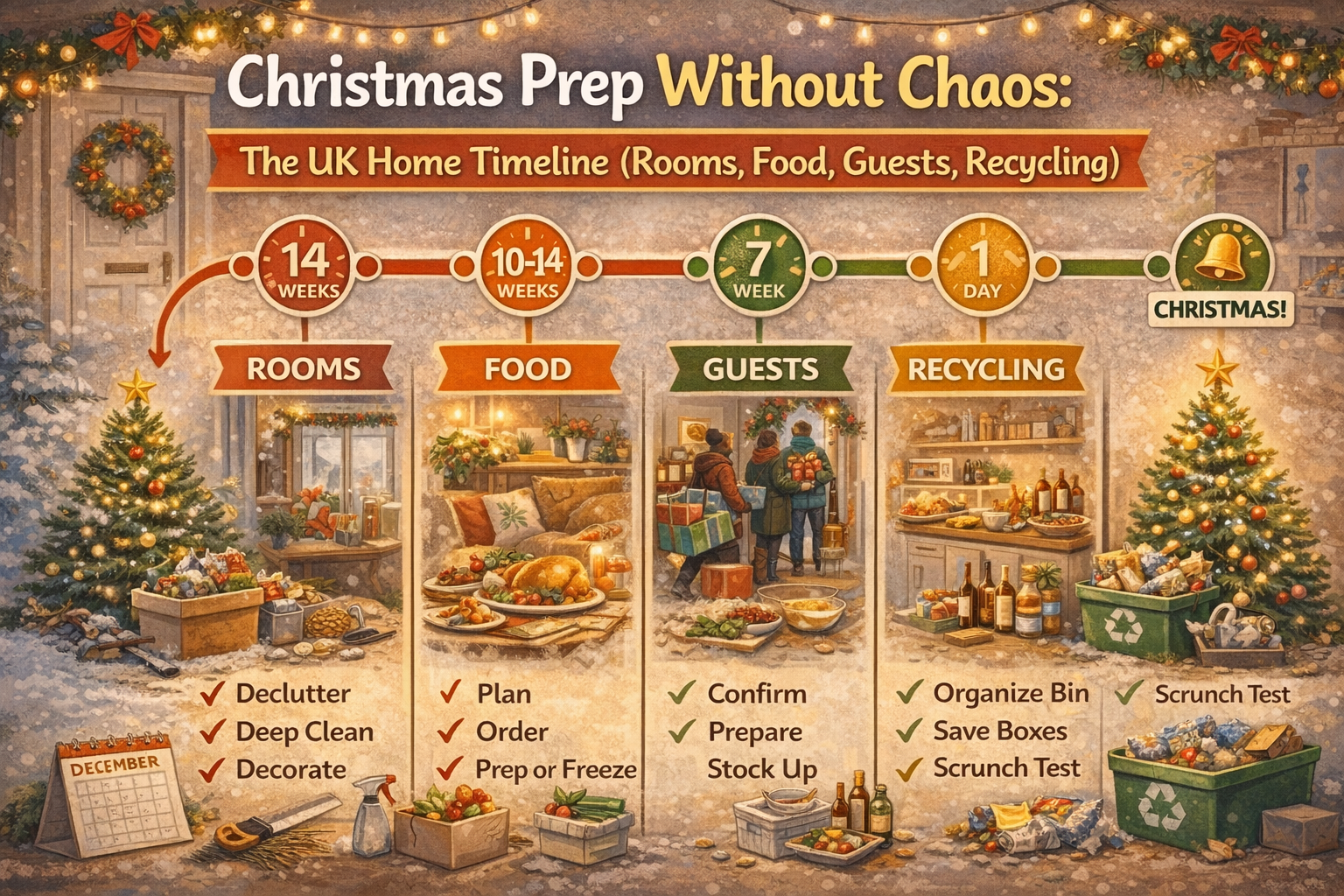
Welcoming friends into a cosy home in London need not be stressful. With a little planning you can keep the flat calm and comfortable while you enjoy the holiday.
Start by decluttering and rethinking flow: clear surfaces, open walkways and use items you already own to serve two purposes. This guide shows a practical, step-by-step setup that begins with making space, then tweaks the living room layout, fixes seating and dining, and simplifies kitchen tasks.
The aim is to protect limited square footage, keep corridors clear and help guests spread out so the room feels relaxed rather than cramped. I’ll preview simple tactics you can use later: temporary entryway storage, buffet-style serving, diagonal table positioning and vertical décor that keeps surfaces free.
Festive does not have to mean cluttered. Keep décor intentional, layer lighting and build small reset moments so chores stay manageable in a real London-flat setting with narrow halls and compact rooms.
Key Takeaways
- You can host comfortably in a small London flat without buying new furniture.
- Begin by decluttering and clearing flow to protect your floor space.
- Use dual-purpose items and buffet-style serving to free seating and surfaces.
- Layer lighting and use vertical décor to make the space feel bigger.
- Adopt tidy-as-you-go routines and small reset moments to keep tasks simple.
Why Christmas hosting feels harder in a small London flat (and how to make it easier)
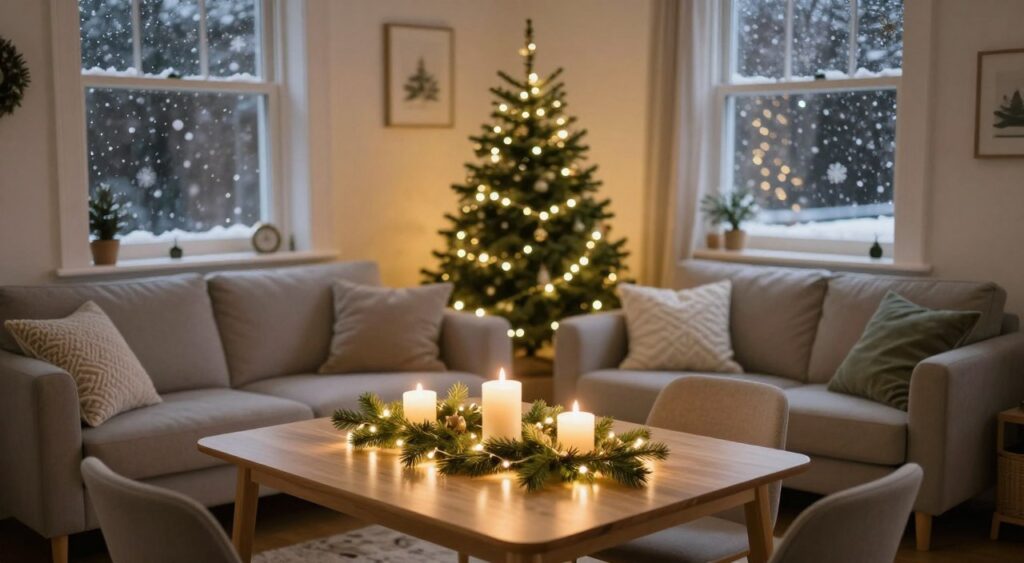
Tight floorplans turn festive gatherings into a puzzle of coats, chairs and serving dishes. In a small space every decorative tree or extra chair eats into usable floor area fast.
Limited square footage also means everyday items — post, chargers, pet toys and spare shoes — reduce usable space the moment guests arrive. That clutter blocks walkways, so people end up shuffling and clustering in one spot. The result? You manage traffic rather than enjoy the day.
| Pinch point | Effect | Quick fix |
|---|---|---|
| Tree or décor taking floor area | Makes the main space feel cramped | Use vertical decorations or a tabletop tree |
| Coats and shoes by the door | Blocks entry and circulation | Temporary entry storage or hangers |
| Worktops full of food and plates | Reduces prep and serving space | Set a buffet zone or use serving boards |
Think in terms of three levers: clear routes through the room, extra temporary surfaces for drinks and plates, and cutting clutter at source. Remember, small spaces warm up quickly — crack a window to keep the air cosy, not stuffy. You don’t need a perfect table for ten; plan for people to move, perch and chat with ease so guests feel relaxed.
Small flat Christmas hosting ideas that start with making room
A little upfront clearing makes a huge difference when you have limited room to entertain.
Begin with a quick sweep: clear coffee tables, windowsills and sideboards so guests have landing spots for drinks and plates. Move non-essentials into a wardrobe, cupboard or a single “everything” basket you can tuck away. Protect walkways first — guests should be able to pass without stepping over piles.
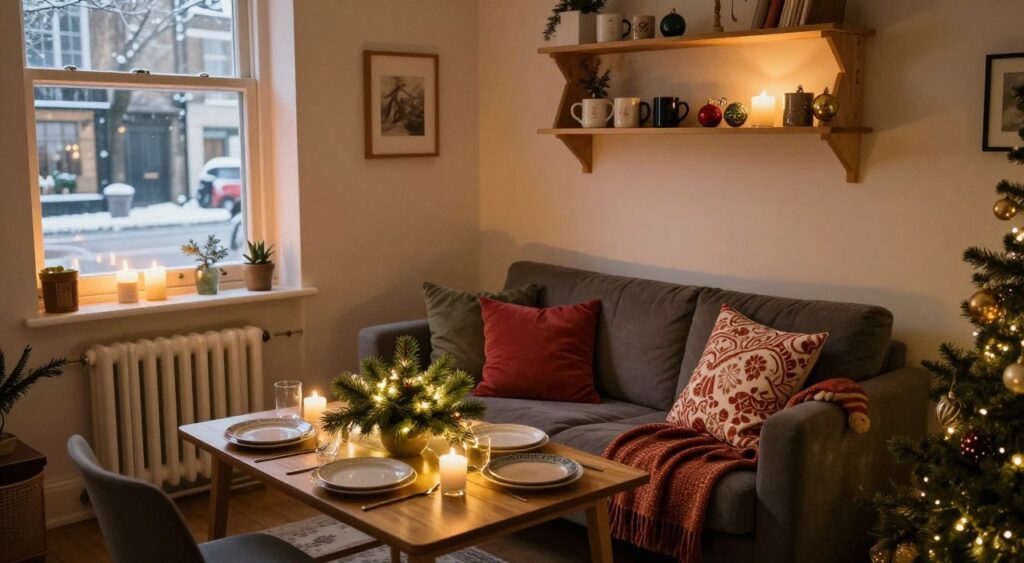
Do a quick clear-out to protect surfaces and pathways
Set a 30-minute reset timer. Remove mail, toys and chargers, and free up three key surfaces for sharing food and cups. This gives the room instant breathing space and saves time during the day.
Create temporary entryway storage
Use large baskets for hats and scarves and a tray or box for footwear to stop the hallway becoming a bottleneck. If you have one, roll out a temporary rack or hangers on the back of a door so coats aren’t dropped on chairs.
Keep decoration intentional and tidy as you go
Choose a few favourite decor pieces and leave gaps on surfaces. Avoid adding “one more” ornament that shrinks usable space. Keep a bin bag near the sofa to contain wrapping and clear plates and glasses to a single spot between courses.
| Problem | Quick fix | Why it helps |
|---|---|---|
| Cluttered coffee table | Clear to create a drinks landing spot | Reduces spills and frees social space |
| Shoes and coats at the door | Use baskets, tray or rolling rack | Stops corridor bottlenecks and protects the floor |
| Too many ornaments | Limit décor to a few items | Keeps surfaces usable and room feeling larger |
Rearrange your living room layout for better flow and more floor space
A quick reshuffle of sofas and tables can add surprising breathing room to a busy living area. Start by spotting the natural route from the door through to the seating and kitchen, then clear it so guests can move without squeezing past corners.
Push bulky pieces to the edges and open a clear route
Move armchairs, consoles and side tables to the perimeter so the centre feels open. This frees visible floor space and reduces trips and collisions.
Set up zones for chatting, snacking and relaxing
Create a chat zone around the sofa and chairs. Place nibbles on a nearby surface to guide guests away from the kitchen doorway.
Designate a cosy corner with throws for relaxing so people spread out naturally.
Pull furniture slightly away from walls to improve the room feel
Nudging sofas and chairs a few centimetres from walls adds depth and a lighter room feel. It also creates a subtle circulation path behind seating.
Use multifunctional pieces already in your home as extra surfaces
Turn nesting tables, an ottoman lid or a sturdy windowsill into serving spots. These pieces work as short-term bars or snack ledges without buying anything new.
Keep sharp corners and breakables clear of main routes, especially if children are present. A safe layout makes living together more relaxed and keeps the atmosphere friendly.
| Action | Benefit | Quick tip |
|---|---|---|
| Push bulky furniture to edges | More central floor area | Shift items before guests arrive |
| Create three zones (chat, snack, relax) | Even spread of guests | Place snacks where you want people to gather |
| Pull seating from walls | Improved room feel and depth | Move pieces 10–20cm out from wall |
| Use multifunctional pieces | Extra surfaces without clutter | Repurpose nesting tables or ottoman lids |
Seating hacks using what you’ve already got
Make every chair count and the room will feel larger instantly. A quick seat audit tells you how many people you can host without buying anything new.
Bring dining chairs into the living room and add a drink-down spot nearby
Move dining chairs into the living area during the main mingle time. Return them to the table when it’s time to eat.
Pair each cluster of chairs with a nearby surface — a side table, ottoman tray or windowsill — so drinks have a proper landing place.
Use ottomans, footstools and storage benches as flexible extra seating
Ottomans and footstools double as seats and surfaces. Storage benches hide throws, napkins or toys when the room gets busy.
Add a folded throw or cushion to backless pieces to make longer chats more comfortable.
Make a cosy kids’ area with floor cushions and throws
Create a corner on the floor with cushions and a blanket to free up adult chairs. This keeps toys contained and spreads people across the space.
- Do a quick “seat audit” before guests arrive: count every usable perch so you know your capacity.
- Move chairs in for mingling, then return them for dining — smart timing keeps the flow.
- Use multifunctional pieces to add seating without cluttering the house.
These simple tweaks get more seating from what you already own and stop everyone crowding the sofa or doorway. Little changes to how you place pieces make the whole room feel calmer for people and plates alike.
Dining in a small space: make the table work for guests, food and comfort
A well-planned table can make a compact dining area feel inviting and effortless.
Extend the setup without buying anything
Add a spare table, desk or card table at one end to build out your dining table. Layer a tablecloth or runner to hide different heights so the look feels intentional.
Layout tricks to free walking lines
Try diagonal positioning: angle the table corner-to-corner to clear a straight path for guests. Or push the table to a wall, use an L-shape with a side table, or create a U-shape with folding surfaces from another room.
Keep décor low and skip bulky extras
Choose low centrepieces like a greenery garland, a few bud vases or a shallow bowl. Ditch chargers and oversized centrepieces so plates, serving dishes and water have priority.
| Layout option | Benefit | Quick tip |
|---|---|---|
| Diagonal table | Cleaner walking line | Angle so chairs don’t block the doorway |
| L-shaped with side table | More surface for food | Use matching linens to unify the look |
| End extension (spare table) | Extra seating without buying | Layer cloths to disguise height differences |
More elbow room equals a calmer dinner. Clear surfaces and sensible layouts let guests relax and cut the chance of spills in tight space.
Small kitchen hosting: buffet-style serving and a drinks station that doesn’t block the worktops
A clear food flow keeps the kitchen workable and lets you spend time with friends. Use one counter as the buffet and free the rest of your worktops for prep and plating.
Turn a counter or island into a buffet zone
Set plates and napkins at one end, mains in the middle and condiments at the far end. Create a single “in” and “out” path so guests don’t double back and cause a bottleneck.
Choose sharing platters and grazing boards
Large boards cut down on bowls and extra plates. They look generous, keep food accessible and reduce washing-up time — perfect where counter space is limited.
Prep ahead and protect worktops
Chop veg, portion desserts and label dishes the day before. This saves time on the day and keeps surfaces free for last-minute tasks.
Use the sink as extra prep area
Slide a sturdy chopping board or purpose-made sink cover over the basin to gain a useful prep surface when every inch counts.
Set up a separate drinks station
Move bottles, ice, glassware and water to a bar cart, sideboard or cleared windowsill. Guests can self-serve drinks while you keep the kitchen for cooking and plating.
| Tip | Why it helps | Quick setup |
|---|---|---|
| Buffet on island | Reduces kitchen traffic and lets guests help themselves | Plates → mains → condiments in a line |
| Grazing boards | Fewer dishes, generous presentation | Group cheeses, meats and veg on wooden boards |
| Prep ahead | Saves time and clears worktops | Portion desserts and label containers |
| Sink cover | Creates extra prep area instantly | Use a firm board or purpose-made cover |
| Drinks station | Stops glasses and bottles crowding the kitchen | Use a cart or tray on a side surface with ice tub |
Festive without the clutter: Christmas tree and décor ideas for tiny corners
A tidy corner can deliver festive cheer without using up your best floor space. Choose an option that matches your gap and habits so the area stays useful during a party.
Tree alternatives that keep the floor free
Pick a slimline tree for narrow gaps, a tabletop christmas tree for a sideboard, or try a vertical garland tree attached higher on the wall. Each option gives the tree look without taking central space.
Go vertical to protect surfaces
Hang garlands, ribbons and ornaments from curtain poles, light fittings or door frames. This keeps tables and shelves clear for plates and drinks and improves the space feel.
Keep a tight palette and place décor with care
Limit colours to two or three complementary tones to reduce visual clutter. Put breakables higher up and away from the main walkway. Let one corner be your feature and keep the rest of the room calm.
| Option | Best placement | Benefit | Quick tip |
|---|---|---|---|
| Slimline tree | Between a radiator and wall | Fits narrow gaps without blocking routes | Use slim LED lights |
| Tabletop christmas tree | Sideboard or console | No floor footprint, easy to move | Anchor with a tray |
| Vertical garland tree | Wall or door frame | Tree silhouette, keeps surfaces free | Attach with removable hooks |
| Hanging ornaments | From curtain poles or light fittings | Decor up high, less risk near coats | Use thin ribbon to match palette |
Lighting and atmosphere that make a small home feel bigger
Good lighting changes how a compact home feels and can make corners breathe. In a tight room, light shapes whether a space reads as open or cluttered. Use this to your advantage while you host.
Layer for warmth without harsh glare
Start with ambient strands of fairy lights for a soft glow, add one or two table lamps for pools of useful light, and finish with a couple of candles for warmth. Avoid relying on a single overhead light that flattens the room.
Brighten corners and bounce light
Place lamps toward dark edges so the whole space feels even and more spacious. Position a mirror opposite a lamp or fairy lights to reflect light around the room and give the impression of depth without moving furniture.
Fresh air and finishing touches
When the room heats up, crack a window for five minutes to refresh the air, then close it to keep the temperature cosy. Add a steady playlist and a seasonal scent — cinnamon, fir or orange — to complete the atmosphere and help guests relax.
| Action | Why it helps | Quick tip |
|---|---|---|
| Layer lights (fairy lights, lamps, candles) | Creates depth and softens glare | Use dim bulbs and LED candles for safety |
| Mirror opposite lights | Bounces light to expand the feel of the room | Lean a mirror on a shelf or hang it low |
| Crack a window briefly | Stops overheating and stale air | Open for 5 minutes mid-gathering |
Conclusion
Round off with one clear plan: make room, set routes and use what you’ve got to keep the day calm.
Start by freeing key surfaces and protecting walkways so people can pass through the living room without squeezing past. Then solve seating and serving in that order — it makes the whole space work harder for guests.
Big wins to repeat next time include entryway coat control, zoning the living room, angling the table when needed, and a buffet or drinks station that keeps the kitchen free for cooking.
Before guests arrive, run a quick five-minute reset: bin bag out, glasses gathered, plates cleared. That tiny habit keeps the room tidy as the day goes on.
Pick two or three of these tips to try this year. You’ll notice more space and less stress — guests remember warmth and welcome, not whether the table matched perfectly.
.