When a present arrives, the finish on the wrap can hide what it is. Some finishes add foil, plastic film, lamination or glitter, and these change how the item behaves when collected for reuse of materials.
The practical meaning of “wrapping paper recycling UK” is simple: sort items that are genuinely fibre-only, keep contaminants out, and follow your local authority’s rules so the correct material is processed.
To avoid guesswork, try a quick at-home scrunch test. If the sheet stays crumpled and shows no shiny backing, it is more likely to be accepted. If it springs back or shows foil, treat it as non-acceptable in many areas.
Council rules differ, so the same wrap might be fine in one borough and rejected in another. Later sections will list the usual rejects — foil, glitter, laminated finishes, sticky tape and extras — and give clear yes/no guidance plus simple prep steps to reduce contamination after gifting.
Key Takeaways
- Check for shiny layers, foil or glitter before you sort.
- Use the scrunch test: crumple and inspect the sheet.
- Local authority rules vary; always confirm collection guidance.
- Remove tape and ribbons to lower contamination risk.
- Follow simple prep steps to help the right material get recycled.
Why wrapping paper causes so much waste in the UK
The seasonal rush produces a huge spike in household refuse and places extra demand on local services. BIFFA estimates about 227,000 miles of discarded wrapping paper each Christmas — enough to circle the Earth more than eight times.
That figure shows how small choices add up. But volume is only part of the problem.
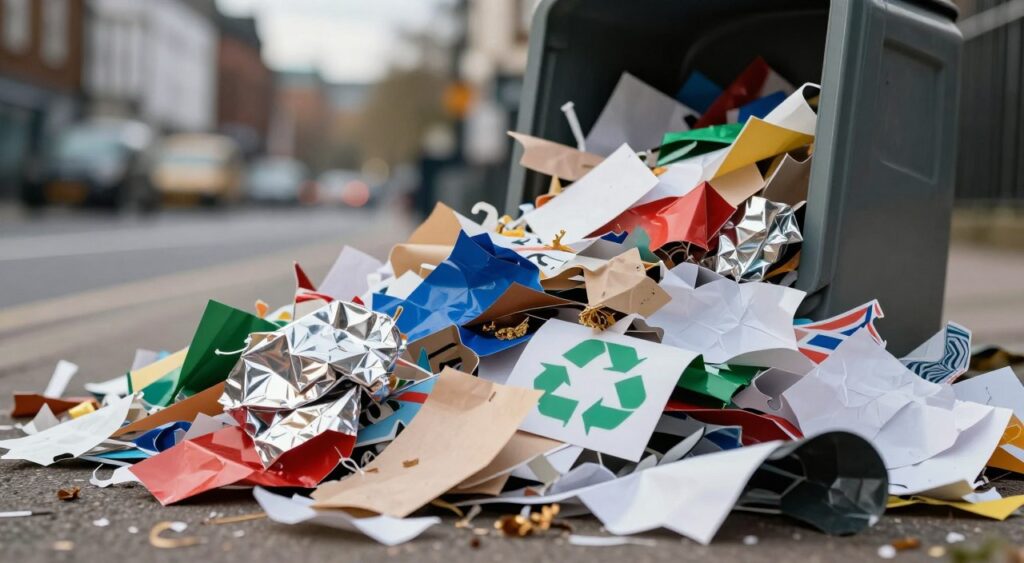
The UK’s Christmas wrapping paper problem in numbers
Millions of sheets arrive at kerbsides. Many are mixed-materials that slow sorting and add cost. Councils face varied contracts and sorting ability, so what is collected differs by area.
Why “it looks like paper” can be misleading
Sheets with foil, glitter or plastic coatings may look normal. In mills, these items do not pulp like clean fibres. That contamination forces removal or rejects and lowers the value of the whole load.
What paper mills struggle with at peak season
Sudden surges mean more contaminated stock to sort. Mills need time and labour to separate non-fibre elements. This is why simple home prep — removing ribbons, tags and tape — helps reduce waste and keeps more material in the proper stream.
- Scale: 227,000 miles highlights the national impact.
- Material mix matters more than sheer volume.
- Household prep and council rules shape final outcomes.
| Issue | Why it matters | Household fix |
|---|---|---|
| Mixed finishes | Prevent pulping, contaminate loads | Choose plain fibre options |
| Plastic lamination | Cannot be processed by mills | Remove or treat as general waste |
| Decorative extras | Increase sorting time and costs | Remove ribbons, bows and tags before disposal |
| Local collection rules | Acceptance varies by council | Check local guidance before sorting |
How the “Scrunch Test” works for wrapping paper recycling
A quick hand test at home can reveal whether a sheet is genuine fibre or has hidden coatings.
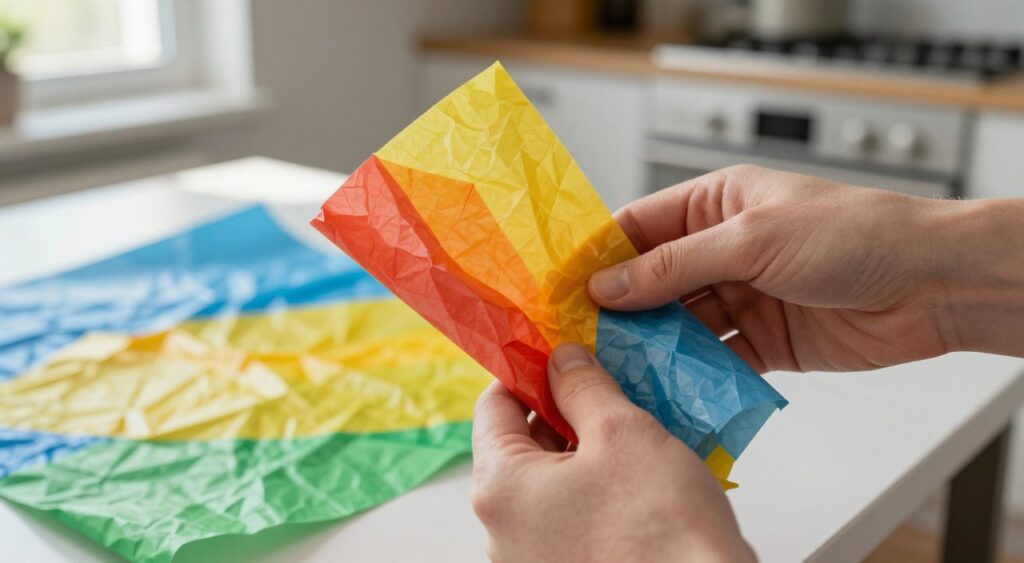
How to do the scrunch test at home
Take a clean piece from opened presents. Scrunch it into a tight ball with both hands.
Release the ball and watch what happens. If the sheet stays crumpled, it often contains mostly fibre and may pass as paper recyclable.
What a pass result usually means for paper recyclable claims
A pass typically indicates higher fibre content and fewer coatings. That makes processing in standard mills easier and reduces contamination risk.
When the scrunch test can mislead you
Before you test, check for shine, plasticky feel, foil sheen or loose glitter. These signs can override a pass result.
Some sheets scrunch but still have thin laminates or metallic inks. If unsure, keep the item out of paper recyclable bins and follow local guidance.
| Test result | Likely meaning | Action |
|---|---|---|
| Stays crumpled | High fibre, few coatings | Place in paper recyclable stream if accepted locally |
| Springs back | Plastic layer or foil | Do not put in paper recyclable; check council rules |
| Shiny or glittery | Contaminant present | Treat as non-recyclable or specialist drop-off |
Wrapping paper recycling UK: what councils usually reject
Not all festive coverings are welcome at the kerbside; many look paper-like but fail processing tests. Councils commonly refuse sheets that contain non-fibre layers or loose decorations.
Glitter and foil finishes that can’t be recycled
Glitter and foil do not break down like fibres. Tiny particles spread through a load and can spoil an entire batch at the mill.
Laminated and plastic-based wrap
If a sheet feels wipe-clean, very glossy or stretchy, it likely has a plastic lining. Such items are often rejected because they cannot be pulped.
Tape, tags, ribbons and bows as contamination
Sticky tape, tags, ribbons and bows jam machines and lower fibre quality. Removing these extras makes accepted material much cleaner.
Gift bags, tissue and mixed-material items
Many gift bags have glued handles, foil trims or laminated faces. Thin tissue and heavily dyed sheets may also be treated differently by councils, so check local guidance.
- If it sparkles, shines like metal, feels plastic-coated, or has lots of stuck-on extras — keep it out.
- Remove tape and ribbons to reduce contamination risk.
- When in doubt, follow your council’s list for acceptable items.
| Reject | Why | Quick fix |
|---|---|---|
| Glitter / foil | Non-fibre contaminants | Bin with general waste |
| Plastic-laminated sheets | Won’t pulp | Dispose as non-recyclable |
| Tags, tape, ribbons | Machine risk / contamination | Remove before recycling |
| Gift bags | Mixed materials | Check label or use reuse |
Where to put recyclable wrapping paper in the UK
After the party, you usually have two practical routes for used gift covering: leave clean sheets for your kerbside scheme if the council accepts them, or take a larger sorted batch to a local recycling centre.
Kerbside collection versus taking it to a centre
Kerbside collection is the easiest option when your council lists clean, dry paper as accepted. That means no tape, no glitter or foil, and no plastic coating. Present items loose or as your authority instructs.
If your area does not accept certain sheets at the kerbside, a trip to the recycling centre is the common alternative. Centres often accept a wider range of sorted material and handle larger volumes after Christmas.
Why rules vary and what to check
Different councils have different sorting systems, contractor rules and contamination thresholds. These affect what they will collect at the kerbside during busy periods.
- Check if wrapping paper is accepted at collection.
- Confirm whether items must be bagged or left loose.
- See if they want it with mixed paper and card.
| Route | When to use it | Tip |
|---|---|---|
| Kerbside collection | Small amounts, accepted locally | Keep sheets clean and dry |
| Recycling centre | Large batches or unclear local rules | Drive sorted bundles after Christmas |
| Rubbish | Contaminated or non-acceptable finishes | Bin to avoid contaminating loads |
Recycle more by preparing your wrapping, cards and extras properly
A simple post-gift routine avoids contamination and helps more material reach mills in good condition.
How to remove tape and non-paper items quickly
Keep a small bin bag for tape, ribbons and bows as you unwrap. Peel away big strips first and pull off taped seams.
Don’t fret over tiny traces if local guidance allows; focus on removing obvious sticky bits and 3D extras.
Wrapping paper tubes, brown paper and other easy wins
Tubes are sturdy card and recycle easily. Save plain sheets for reuse and choose brown paper next time — it is simpler to accept.
Christmas card rules and what usually makes cards non-recyclable
Flat cards without glitter, plastic gems or pop-ups are usually fine for the paper stream. Cards with bows, glitter or heavy embellishment commonly fail collection checks.
Remember: about one billion cards are bought each year; small choices add up.
Upcycling ideas for cards into gift tags and decorations
Cut old cards into tags, bunting or place cards before sending the remainder to the paper recyclable bin.
Also, tear envelopes off non-paper seals and include them with your paper pile where allowed.
- Quick prep routine: bag tape/ribbons, pile clean sheets.
- Fast tape tips: peel large pieces, tear seams, prioritise obvious contaminants.
- Easy wins: recycle tubes, favour brown paper, reuse plain sheets.
| Item | Action | Why |
|---|---|---|
| Tubes | Recycle | Cardboard, accepted widely |
| Embellished cards | Upcycle or bin | Glitter and 3D bits contaminate loads |
| Envelopes | Include if plain | Most are accepted once seals are removed |
Conclusion
Small choices after unwrapping change whether an item ends up as useful fibre or as rubbish. Do a quick finish check, try the scrunch test, remove tape and ribbons, then follow your local council rules.
Keep glittery, foiled or plastic-coated sheets and mixed-material bags out of collections so accepted loads stay clean. These few steps lift the quality and chance of acceptance.
Think reuse and reduce next time: choose simple wrap, save plain sheets and reuse tubes and tags. For cards, favour plain designs, upcycle where you can and recycle the rest with other paper where accepted.
When unsure, check local guidance — local rules decide what can go in household bins and how your efforts turn into real material recovery.