Every week, refuse collectors across the United Kingdom encounter a myriad of unexpected discoveries while sifting through bins. These encounters reveal that rubbish often holds far more than just ordinary household waste. From peculiar oddities to valuable treasures, the contents of our waste can surprise even the most seasoned waste management professionals.
With over 200 million tonnes of waste generated annually, the opportunities for unexpected finds are abundant. Collection crews frequently report items that defy belief, prompting local councils to implement strict disposal regulations. While some discoveries can be amusing, others pose serious health and safety risks to those who handle the waste.
This article delves into real-life accounts from bin men and waste management companies, highlighting everything from misplaced valuables to bizarre memorabilia. Join us as we explore the hidden stories lurking in wheelie bins and recycling boxes, revealing the financial and legal consequences of improper disposal along the way.

Key Takeaways
- Refuse collectors often find unexpected and unusual discoveries.
- UK generates over 200 million tonnes of waste each year.
- Some items pose health and safety risks to collection workers.
- Local councils enforce strict disposal regulations for waste.
- Real-life accounts reveal bizarre and valuable treasures.
Introduction: Exploring the Strange Items Found in Trash UK
“Where there’s muck, there’s brass.” This well-known saying sets the stage for a fascinating exploration of the weirdest things encountered by refuse collectors. With over 200 million tonnes of waste produced annually in the UK, bin men regularly stumble upon an array of astonishing finds.
One particularly eye-opening moment came from the 2011 revelations by Enfield Council. Councillor Chris Bond remarked that it “beggared belief” what residents attempted to dispose of in recycling bins. Among the bizarre discoveries were sex toys, dead pets, oil paintings, and even urns containing ashes.
Additionally, Business Waste, a prominent UK waste management company, compiled a list of shocking finds. This included misspelt royal wedding merchandise, wedding dresses, a complete wedding cake, and a box of unused breast implants. Such revelations highlight the eclectic nature of what people throw away.
While some bin men strike lucky with cash or gold, the reality is that most face unpleasant smells and hazardous materials daily. The job can be far from glamorous, yet it plays a crucial role in our society.
This article will not only delve into the weirdest things discovered but also address the challenges faced by collection crews and the impact on local authorities. It will be structured as a listicle, moving from oddities to treasures, followed by the operational and legal ramifications of improper rubbish disposal.
Understanding what constitutes proper waste disposal is vital. It helps protect both workers and the environment, significantly reducing contamination in recycling streams. The information presented here is drawn from real accounts shared by bin men, waste companies, and council reports, ensuring authenticity.
In conclusion, the strange items encountered in rubbish collections serve as a reminder of the importance of responsible waste management. By being mindful of what we discard, we can all contribute to a cleaner and safer environment.
The Weirdest and Most Unusual Items Discovered by UK Refuse Collectors
Rubbish collectors often stumble upon the most peculiar finds while going about their daily rounds. The job can lead to encounters with some truly bizarre and shocking discoveries. For instance, one bin man reported an unforgettable smell emanating from a bin full of decomposing dead cats. Such a sight is not for the faint-hearted.
In another shocking instance, a biohazard waste removal worker discovered a two-week-old human leg protruding from a container during a hospital collection. This highlights the extreme nature of some unwanted items that refuse collectors may encounter.
The 2011 findings from Enfield Council revealed a shocking array of contents in recycling bins. Items included sex toys, dead pets, oil paintings, and even an urn containing ashes. Councillor Chris Bond expressed disbelief at what residents attempted to recycle, showcasing the unusual nature of these finds.
Even more startling was the discovery of a human skull in a litter bin. After police investigation, it turned out to be a prop from a local theatrical company, illustrating how seemingly sinister items can have innocent explanations.
In 2013, refuse collectors stumbled upon a consignment of over 10,000 out-of-date condoms and a box of “Free Nelson Mandela” T-shirts, long after the anti-apartheid campaigner’s release. Such finds serve as a reminder of how unwanted items can be bizarrely anachronistic.
Oddities and Unbelievable Finds
Ordinary objects can also take on a peculiar aspect when found in the wrong context. For example, a plastic Christmas tree was discovered in an “Organic Only” recycling bin. If unnoticed, this error could cost local authorities over £1,000 in disposal fees.
Another issue arises from school milk waste. Schools often empty excess milk into bins rather than down the sink, resulting in three inches of cheese forming at the bottom of the bin during warm weather. This creates an appalling smell for collection crews.
Moreover, British birdlife has been known to take up residence in rubbish receptacles. A Blue Tit was spotted nesting in a wall-mounted cigarette bin at the RSPB’s Vane Farm Nature Reserve, while a family of robins made their home in a wheelie bin in Temple Sowerby, Cumbria. This prompted Eden Council to issue a second garden waste bin to avoid disturbing the birds.
These weirdest things underscore the unpredictability of waste collection work. They highlight the pressing need for clear disposal guidelines to prevent such oddities from ending up in bins.
Valuable and Sentimental Objects Found in Rubbish Collections
Beneath the surface of rubbish, one can discover astonishing items that tell a story. These remarkable finds often carry significant sentimental value or monetary worth, making the efforts of refuse collectors worthwhile.
One heart-warming story involves James Ross from North Shields, who lost his wedding ring during a visit to his local recycling centre. Plant operator Jordan Cooper and his team meticulously combed through a massive mound of waste to recover it. Cooper described the search as “like looking for a needle in a haystack.” This story exemplifies the emotional connection people have with their belongings.
Another incredible discovery was made by employee David Rose at a waste disposal centre. He found a top hat and cigars once belonging to Winston Churchill, along with a signed photograph. This treasure was valued at over £10,000 on The Antiques Roadshow, showcasing the potential for significant finds in the most unexpected places.
In a remarkable tale from San Antonio, Texas, a man spotted a violin in a pile of trash. Initially intending to use it for spare parts, he later learned on Antiques Roadshow USA that it was crafted by the renowned Italian violin maker Giuseppe Pedrazzini, valued at up to $50,000. Such stories remind us that unwanted items can sometimes be hidden gems.
Additionally, a cleaner at Incheon International Airport discovered seven gold bars worth over £240,000 while emptying a bin. Although local “finders keepers” laws allowed the finder to claim a percentage of the value, it was ultimately ruled ineligible for employees on company property.
Moreover, a bin man was offered various unwanted items by a man moving house, including a PS1, Nintendo games, a white gold necklace with diamonds, and a broken but repairable gold chain. This illustrates how one person’s trash can indeed become another’s treasure.
In the United States, a woman whose sister worked for a waste management company regularly came across valuable items discarded by businesses and schools. Among these were 150 IBM mechanical keyboards, which she sold for $100 each on eBay.
Another astonishing find was a large box of matchbox cars valued between £3,000 and £5,000, proving that collectors can uncover treasures in the most unlikely places. Furthermore, Business Waste operators have also struck lucky, with one finding £500 in old clothes and another discovering £5,000 in used notes. A winning lottery ticket was even recovered, with all proceeds donated to charity when no owner came forward.
These stories highlight that valuable and sentimental objects are often discarded accidentally or without knowledge of their worth. While such discoveries are rare, they underscore the importance of careful disposal and the potential for reuniting people with their lost treasures through diligent waste management practices.
| Item | Value | Location |
|---|---|---|
| Wedding Ring | Sentimental | North Shields Recycling Centre |
| Winston Churchill’s Top Hat | £10,000+ | Waste Disposal Centre |
| Italian Violin | Up to $50,000 | San Antonio, Texas |
| Gold Bars | £240,000 | Incheon International Airport |
| Matchbox Cars | £3,000 – £5,000 | Various Locations |
Challenges Faced by Bin Men and Refuse Collectors on Their Rounds
Bin men navigate through a world of rubbish that can sometimes present shocking and unpleasant surprises. The olfactory challenges are immense, with one refuse collector describing the smell of decomposing dead cats found in a bin as “unforgettable.” This scent leaves an imprint on the brain that no amount of training can prepare a worker for.
Moreover, the disgusting reality of school milk waste adds to their challenges. Excess milk poured into bins ferments in warm weather, creating three inches of cheese at the bottom. This produces a rancid odour that makes collection rounds particularly unpleasant.
Biohazard waste also poses serious health risks. A worker for a biohazard waste removal company once discovered a two-week-old human leg protruding from a hospital waste container. Such incidents illustrate the dangers associated with improper disposal.
Shocking behaviours have been reported among some workers. One bin man revealed that a colleague regularly eats and drinks things found in rubbish bins, highlighting the desperation or extreme habits that can develop in such a challenging work environment.
The variety of hazardous and disgusting waste encountered is alarming. Enfield Council reported instances of dog excrement placed in recycling bins, alongside blow-up dolls and sex toys. These discoveries add to the daily challenges faced by refuse collectors.
Additionally, refuse collectors must deal with heavy and awkward unwanted items that residents incorrectly assume will be taken. Items like fish tanks, old mattresses, and even samurai swords can cause physical injury.
The psychological toll of finding disturbing items cannot be overlooked. A stuffed raccoon dressed in a child’s T-shirt or a human skull prop that initially caused alarm until police identified it as theatrical are just two examples of the bizarre encounters faced.
These challenges are compounded by the physical demands of the job. Bin men walk miles each day and lift heavy loads in all weather conditions. Despite these difficulties, many refuse collectors take pride in their work. A notable example is the crew that helped search for James Ross’s wedding ring, demonstrating their commitment to the community.
Understanding these challenges fosters greater respect for waste collection workers. It underscores the need for residents to dispose of rubbish responsibly, ensuring that the work of refuse collectors is not made more difficult than it already is.
| Challenge | Description |
|---|---|
| Olfactory Challenges | Smell of decomposing dead cats described as “unforgettable.” |
| School Milk Waste | Excess milk ferments, creating rancid odour and cheese. |
| Biohazard Waste | Discovery of a human leg in a hospital waste container. |
| Hazardous Items | Dog excrement, blow-up dolls, and sex toys in bins. |
| Physical Demands | Heavy items like fish tanks and mattresses can cause injury. |
Impact of Improper Disposal on Local Authorities and Waste Management
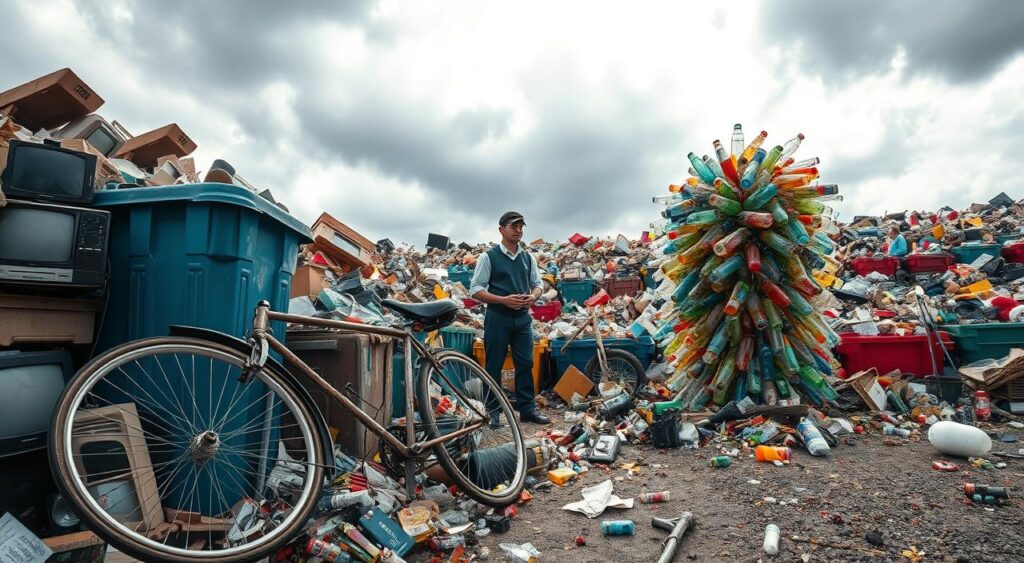
The consequences of improper waste disposal can have far-reaching effects on local councils and waste management systems. A single misplaced item, such as a plastic Christmas tree in an “Organic Only” recycling bin, can contaminate an entire 10-tonne load. If unspotted, this could force local authorities to redirect it to landfill at a cost exceeding £1,000.
This contamination places a significant financial burden on councils and waste management budgets. Money that could fund other public services is instead spent on landfill charges and sorting facilities. The operational consequences are equally concerning, as collection crews face extra workloads sorting through contaminated recycling. This leads to delays in collection rounds and reduced efficiency.
Improper disposal of items like dog excrement, used nappies, and food waste in recycling bins not only ruins recyclable materials but also creates health hazards for workers at sorting facilities. Local authorities must invest in additional education and enforcement measures to combat contamination, diverting resources from other essential services.
Repeated contamination issues can lead to entire neighbourhoods having their recycling collections rejected. This frustrates residents who do follow the rules and undermines public trust in waste management systems. The cost of improper disposal extends beyond immediate financial penalties, impacting the environment through increased landfill use and the carbon footprint of additional collection journeys.
Waste management companies and councils track contamination hotspots using data from in-cab technology. This allows them to identify patterns and target problem areas with tailored communications. Residents play a crucial role in minimising these impacts by taking a moment to check what can and cannot be placed in each bin.
In conclusion, the financial and operational consequences of improper disposal affect everyone, from council tax payers to the environment. Responsible waste management is a shared community responsibility.
Waste Management Laws and Regulations in the UK
The framework for waste management legislation in the UK is primarily established by the Environment Protection Act 1990. This Act serves as the cornerstone of how rubbish must be handled, stored, and disposed of by both households and businesses.
Under this legislation, severe penalties exist for waste offences. Offenders can face fines of up to £50,000 or even imprisonment for up to five years. Such consequences underscore the seriousness of these legal obligations.
Even minor infractions are taken seriously. For instance, a fixed penalty of £100 can be issued for putting a wheelie bin out on the wrong collection day. This illustrates that authorities are vigilant about compliance at every level.
The Act empowers local authorities and the police to investigate and prosecute cases of illegal dumping, fly-tipping, and hazardous waste disposal. Real-life examples include police involvement when human remains or suspicious items are discovered in bins.
Correct recycling and rubbish disposal are crucial under the law. Residents have a legal duty of care to ensure their waste is managed properly from the point of production to final disposal.
Additionally, the Act places obligations on waste management companies and councils to provide adequate collection services and disposal facilities. This creates a shared responsibility between authorities and the public.
Ignorance of the law is not a defence. Residents who improperly dispose of items like samurai swords, old mattresses, or hazardous chemicals in household bins can face prosecution.
For example, Enfield Council has encountered cases where urns containing ashes and dead pets were found in recycling bins. Such improper disposal can trigger enforcement action.
The legal framework aims not only to punish but also to protect the environment and the health and safety of refuse collectors who handle waste daily. It is essential for residents to familiarise themselves with their local council’s waste disposal guidelines. This knowledge can help avoid inadvertently breaking the law and contributing to the challenges faced by waste management services.

How UK Councils and Waste Companies Tackle Waste Disposal Challenges
Local councils and waste management companies are increasingly adopting innovative strategies to tackle the challenges of rubbish disposal. Effective communication and technology play vital roles in this effort.
Public Education and Communication Strategies
UK councils utilise various channels to educate residents about proper waste disposal. Email newsletters, printed leaflets delivered to every home, and online portals provide detailed recycling guides. These resources help residents understand what can and cannot be placed in their bins.
Resident mobile apps have become essential tools. They allow people to check collection schedules, report missed bins, and look up which items belong in which bin. This reduces confusion and contamination at the source.
Clear and consistent messaging from authorities is crucial. Successful councils ensure that households know exactly what type of rubbish is being collected each week, on what day, and in what receptacle. For instance, Eden Council issued a second garden waste bin to a family in Temple Sowerby when robins nested in their wheelie bin. Similarly, the RSPB put up a poster asking visitors not to use a cigarette bin where a Blue Tit had made its home.
Technological Advances in Waste Collection and Monitoring
Mobile in-cab technology enables collection crews to report issues in real-time. This includes contaminated bins or inaccessible properties, feeding data back to the office instantly. Such technology allows waste management teams to distinguish between one-off events and recurring problems, analysing their impact on collection times and overall efficiency.
Whitespace municipal waste management software is already used by over 100 UK councils. This software enables local authorities to dynamically build and change workflows, improve communications between office staff and crews, and generate requests and round sheets in response to reported problems.
A digital, joined-up approach creates a data trail for every collection. If someone accidentally throws away a wedding ring or other valuable item, the system can show exactly what vehicle picked it up, on what round, and where the waste ended up. This tracking capability is beneficial for police and authorities when investigating illegal disposal or searching for evidence.
In conclusion, these combined strategies—public education and technological innovation—are helping councils reduce cross-contamination, minimise the impact of improper disposal, and ultimately create a more efficient and responsive waste management system for all UK residents.
| Strategy | Description |
|---|---|
| Public Education | Email newsletters, printed leaflets, and online portals educate residents. |
| Mobile Apps | Tools for checking schedules and reporting missed collections. |
| Real-time Reporting | Mobile technology allows crews to report issues instantly. |
| Whitespace Software | Used by 100+ councils for dynamic workflow management. |
| Data Tracking | Creates a trail for collections, aiding investigations. |
Conclusion
In conclusion, the extraordinary range of unusual finds encountered by refuse collectors showcases the hidden stories within our waste. From decomposing animals and human remains to sentimental treasures like wedding rings and historically significant artefacts such as Winston Churchill’s top hat, the world of rubbish is anything but mundane.
This dual nature of waste collection work highlights the daily challenges faced by bin men, who must navigate unpleasant smells and hazardous materials while occasionally uncovering valuable items. Responsible waste disposal is crucial, as every misplaced object can have significant consequences for collection crews, local authorities, and the environment.
The Environment Protection Act 1990 underscores the legal obligations all residents share in managing rubbish correctly. Councils and waste management companies are actively using technology and public education to improve compliance and reduce contamination.
Let us remember the dedicated workers behind every bin collection. Simple actions like rinsing recyclables and checking collection schedules can make a meaningful difference. Think twice before discarding something; one person’s trash might be another’s treasure—or a serious hazard.